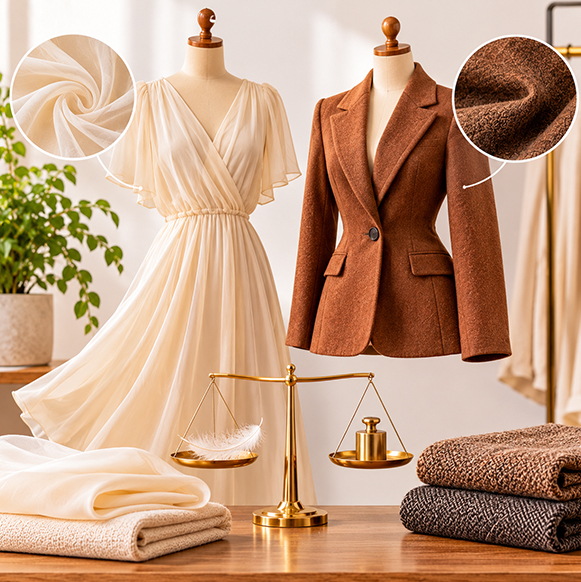
Why Fabric Weight Changes The Entire Character Of An Outfit
Fabric weight is one of the quietest forces shaping the appearance of clothing. It can influence how a garment falls, moves, holds its form, interacts with other pieces, and ultimately changes the atmosphere of an entire outfit. Two garments may share the same colour and silhouette yet create completely different impressions because their fabrics carry different levels of weight.
Understanding this relationship can make getting dressed more intuitive. Instead of focusing only on colour or design, paying attention to fabric weight allows you to build combinations with greater depth, balance, and character.
What Fabric Weight Really Means
Fabric weight generally refers to how much a material weighs within a defined area. It is influenced by factors such as fibre composition, construction, weave, density, and finishing.
A lighter fabric tends to feel fluid and responsive, while a heavier fabric generally has greater structure and presence. However, weight should not automatically be confused with thickness. A material can feel substantial without appearing bulky, while another can appear substantial because of its construction rather than its actual density.
These distinctions become important when considering how different garments work together.
Light Fabrics Create Movement
Lightweight materials often respond naturally to body movement. They can drape softly, create gentle folds, and produce an effortless sense of fluidity.
This makes them particularly useful when you want an outfit to feel relaxed and uncomplicated. Their movement can soften sharper silhouettes and prevent a combination from appearing overly rigid.
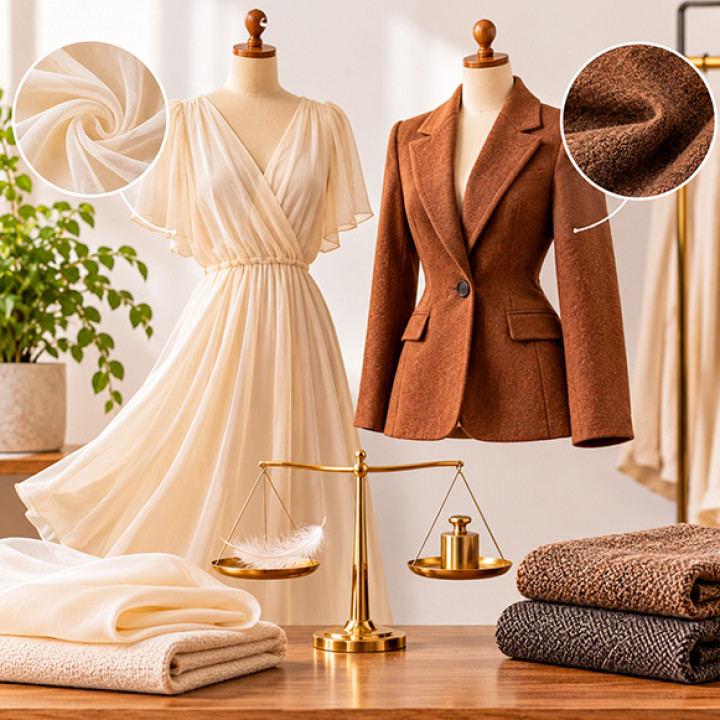
Light fabrics can also create an airy visual impression. When paired with similarly fluid materials, the result can feel understated and comfortable. When combined with a more structured fabric, however, they gain an interesting contrast that adds definition to the overall appearance.
Heavier Fabrics Bring Structure
Denser materials tend to hold their form more effectively. They can create stronger lines, clearer shapes, and a more grounded appearance.
This quality can completely alter the character of an outfit. A simple silhouette made from a substantial fabric may appear more defined than the same silhouette created from a lighter material.
Heavier fabrics can also introduce visual depth. Their surfaces often interact with light differently, creating shadows and subtle changes that make an otherwise simple outfit feel richer.
The important consideration is balance. When several substantial fabrics are combined, the result can feel deliberately structured. When one is paired with something lighter, the contrast can create a more dynamic relationship.
Weight Changes How Colour Appears
Fabric weight does more than influence shape. It can also affect the way colour is perceived.
A dark tone appearing on a dense fabric may feel deeper and more grounded. The same tone on a lightweight, fluid material may appear softer because the surface interacts differently with surrounding light.
Similarly, lighter colours can take on different personalities depending on their material. A pale shade on a crisp, substantial fabric may appear clean and defined, while that same shade on a delicate surface can feel softer and more relaxed.
This is why choosing colours without considering their materials can sometimes produce unexpected results.
Creating Balance Between Fabrics
One of the most useful principles is contrast.
Imagine a structured outer layer combined with a fluid inner piece. The heavier material provides definition while the lighter fabric introduces movement. Neither competes with the other because they perform different visual roles.
The same principle works in reverse. A lightweight main piece can gain greater presence when paired with a denser layer.
Balance does not necessarily mean matching fabric weights. In fact, differences often create more interesting combinations. The goal is to understand what each material contributes and allow those qualities to complement one another.
Fabric Weight And Seasonal Dressing
Fabric weight naturally influences how clothing feels in different conditions. Lighter materials can create a sense of airiness, while denser constructions tend to provide greater warmth and visual substance.
However, seasonal dressing does not have to mean completely changing your personal aesthetic. Instead, you can explore different fabric weights within familiar colours and silhouettes.
A favourite neutral palette, for example, can feel entirely different when expressed through lighter woven materials compared with dense knits or structured fabrics.
This allows a wardrobe to evolve while retaining a consistent visual identity.
Weight Influences Silhouette
The relationship between fabric weight and silhouette is particularly important.
A lightweight material may follow the body more naturally, creating a softer outline. A heavier material is more likely to maintain the intended structure of a garment.
This means fabric can influence whether a particular design feels fluid, relaxed, crisp, or architectural.
When choosing clothing, consider the relationship between the intended silhouette and the material supporting it. A fabric that complements the design can make the garment feel naturally balanced, while an unsuitable weight may change how the entire piece presents itself.
Movement Tells Its Own Story
Clothing is rarely experienced while standing completely still. Walking, sitting, turning, and reaching all reveal how fabric behaves.
Lightweight materials tend to respond quickly to movement, creating flowing changes across the surface. Heavier fabrics often move with greater control, maintaining their shape while producing slower, more deliberate motion.
This difference contributes significantly to the personality of an outfit.
An outfit built entirely around movement may feel relaxed and fluid, while one centred around structured materials can appear more composed and defined.
Look Beyond Appearance
Fabric weight is easy to overlook because it is not always immediately obvious in a photograph or display. Yet it can determine how clothing actually feels once worn and how individual pieces interact with one another.
When selecting clothing, consider more than colour and silhouette. Think about whether the material feels light or substantial, fluid or structured, soft or firm. Consider how it might interact with the fabrics already present in your wardrobe.
These small observations can make outfit building much more deliberate.
Ultimately, fabric weight gives clothing character. It influences movement, structure, colour perception, seasonal suitability, and visual balance. Once you begin noticing these qualities, choosing garments becomes less about isolated pieces and more about understanding relationships.
A well-considered outfit does not need dramatic details to feel distinctive. Sometimes, the difference comes from something far quieter: the way one fabric falls beside another, the way a heavier surface anchors a lighter one, or the way material transforms a familiar silhouette.
That is the understated power of fabric weight.